Is Ethan Callahan Just a Grown Up Holden Caulfield?
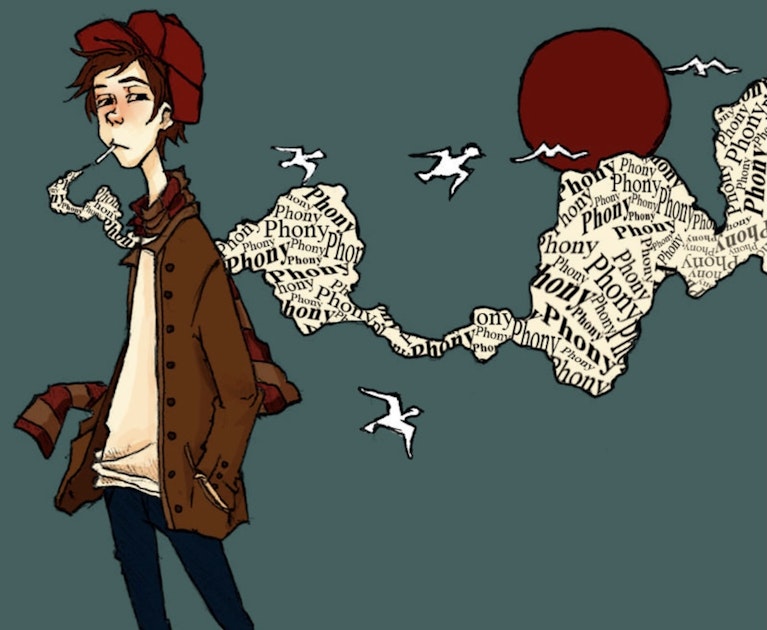
There are two things I need to admit as I begin today’s blog.
First, I know this might turn some readers off: I can’t think of a more polarizing character than Holden Caulfield, narrator of J.D. Salinger’s Catcher in the Rye. A cult symbol for many, Holden epitomizes a character who is deeply loved by some yet despised by more.
Secondly, I have to admit that I was reading a ton of Catcher while writing Whalers, and I fall into the former category—I love Holden. I think he’s hilarious. Is he misguided? Of course. Is he, at times, an idiot? Absolutely. But Holden’s ability to call out the “phoniness” of the world around him has always stuck with me. He told it like he saw it, without caring what anyone else thought.
I often think about writers’ lives as they create their books. When J.D. Salinger was writing Catcher in the Rye, did he know so many people would be drawn to his narrator? Did he realize his work would spark countless internet debates about whether this teenager is someone to look up to? Did Salinger embed his own view of the world in Holden, expressing it through his lens?
Many people view Holden Caulfield as a whiny brat. He’s selfish and often gives off an attitude that he’s better than everyone else. Some readers put Catcher down after only a few pages, unable to stand his cynicism and complaints. On the other hand, Holden is who he is for a reason. He’s jaded, misguided, depressed, and channels this into a negative view of the world around him.
I have to admit—this was a major inspiration for Ethan Callahan. Our middle school teacher and narrator of Whalers shares many qualities with Holden. He’s jaded, disillusioned, and often sees the worst in his circumstances. But deep down, like Holden, Ethan’s cynicism comes from a place of longing—a desire to fit in, to be loved, and to be accepted for who he truly is. And when he isn’t, he lashes out, pointing fingers at the world around him.
I know I have to write a blog about Alex Turner and the Arctic Monkeys, who have a chapter dedicated to their music in Whalers. This chapter isn’t just a tribute to the band’s greatness but also an exploration of change and evolution. Turner once spoke about the evolution of his songwriting, saying: “It was just pointing at things. I was looking at something going on. I’d be in the corner of the pub, but eventually, you run out of things to point at. Eventually, you turn inward.”
Turning inward is a major theme of Whalers. Over time, people like Ethan and Holden must stop pointing fingers at everything around them and begin to look within. They start to ask why they see the world the way they do and what it is about themselves that shapes their judgment. Much of Whalers explores this idea: we can’t fix the world until we fix ourselves.
But that’s the beauty of first-person narrators—they offer only one perspective. And we all have our own, don’t we?
Are you a fan of Holden, or do you see him as a whiny brat? Read Whalers when it debuts in 2025 to see if this sentiment translates to Ethan as well. And stay tuned for the cover reveal, coming December 1st.

 Kyle Farnworth
Leave a comment