Gates of Fire by Steven Pressfield
Overall Rating: 3.5 Stars
George Costanza (of Seinfeld fame) once claimed that the “it’s not you, it’s me” routine was exclusive to him and him alone. Unfortunately, as I write my review of this novel, I’m going to need to take it. This is a good book, but I’m going to have to rate it 3.5 stars.
I wonder how good of a “novel” narrative, historical fiction can be? As I finished Gates of Fire, this is the question on my mind. Is this a brilliant book? Yes, for sure. Is it over-hyped as a novel? In my mind, the answer is a resounding yes.
Maybe it’s the POV, or the lack of character depth, or that Steven Pressfield is so damn well-versed in the history of Sparta that he wants you to know about it all. I’m not sure. In this review, I’m going to really struggle to articulate what it is about this book that just didn’t land quite as solidly for me as it has for others, and I hope you trust that I will, ultimately, arrive at a point.
SPOILERS BELOW:
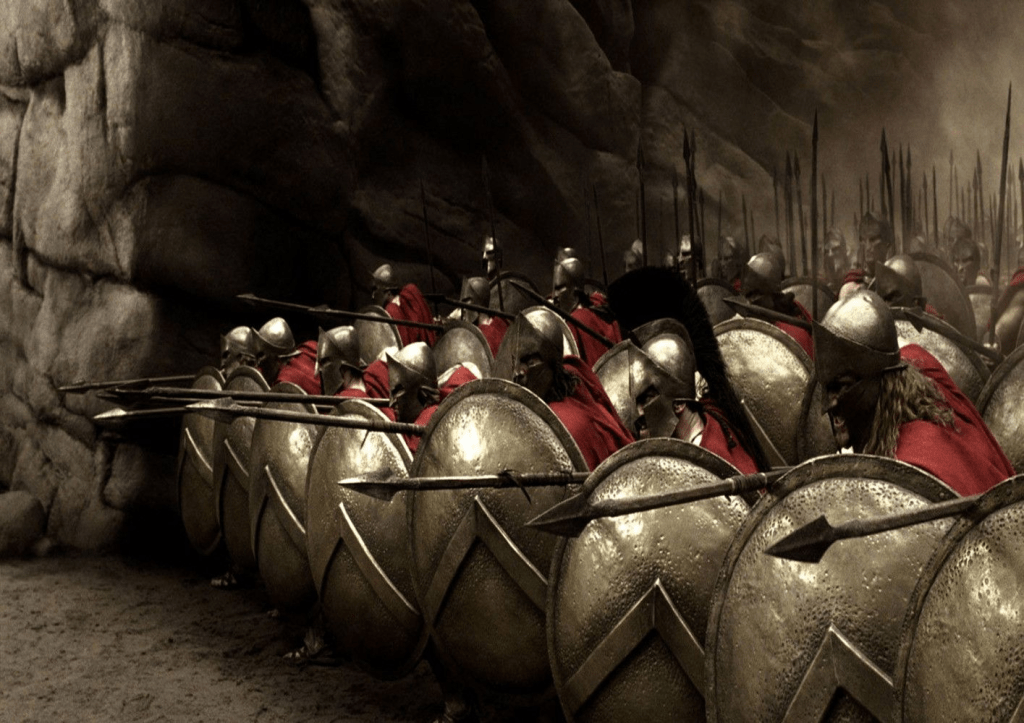
Gates of Fire is the true story of the 300 Spartans, which I knew a decent amount about due to deep dives into Wikipedia after the Gerard Butler movie came out. The novel is told from the point-of-view of Xenoes, the squire of one of the 300 who is one of the few to survive the battle. He’s held by the Persians and asked to recount his story to their King Xerxes in hopes of helping him understand just how and why the 300 Spartans (and others) would give their lives in the last stand against his mighty army.
It’s an interesting move, this point-of-view. Instead of having Leonidas or one of the 300 be the focal character or narrator, it’s instead told by a “perioikos”, a free citizen but one level below a full Spartan.
On one hand, it offers a unique look into the Spartans culture that makes them feel almost otherworldly, because “you” aren’t fully one of them. But Xenoes point-of-view also makes it so that its incredibly difficult as a reader to ever get too close to any of the 300. The closest would be Alexandros, Xenoes’ friend, and sometimes Rooster, a half-Spartan bastard who hates their community due to his upbringing. There’s Dienekes, who Xenoes squires for, and there is, of course, Leonidas, their king, but they sometimes feel like they are at the cool kids table and I’m just observing from the outside.
Despite a wide cast of characters, I never felt much depth from any of them, outside of MAYBE Alexandros and Rooster on rare occasions. I want to be clear, though. I don’t think this is the author’s fault in the least. I think it has more to do with what it actually meant to be a Spartan warrior. They were warriors, hardened out of metal, essentially abused in the agoge to be fierce, and loyal, and willing to die for their cause. That was true for all of them. This, unfortuntaely, made it feel like they all essentially blended in together with one another. Polynikes was different because he was the runner and hard on Alexandros. Dienekes, because he was a little more introspective about “love is the opposite of fear”, and was Xeno’s warrior. But those moments of clarity into who these men were felt so few and far between.
There were times the novel really had me hooked, most notably the stretch surrounding Rooster’s parentage and the lady Arete’s plan to save his son despite his exile from Sparta. But just when I felt like we were getting somewhere, we were back to training, and battles, and bloodshed in a conflict where I, like so many people, already knew the ending.
Steven Pressfield, it really isn’t you. This is a well-researched book that gave me a richer understanding of Sparta than any Wikipedia dive ever could. As history, it’s riveting, but as a novel, it left me wanting a little more.
For readers who thrive on martial detail and battlefield ethos, it will be brilliant. For me, who leans toward East of Eden or The Brothers K, it fell a bit short. Call it 3.5 stars, but rounded up out of respect for its achievement.
 Kyle Farnworth
Leave a comment