How Steinbeck’s Novel influenced Whalers
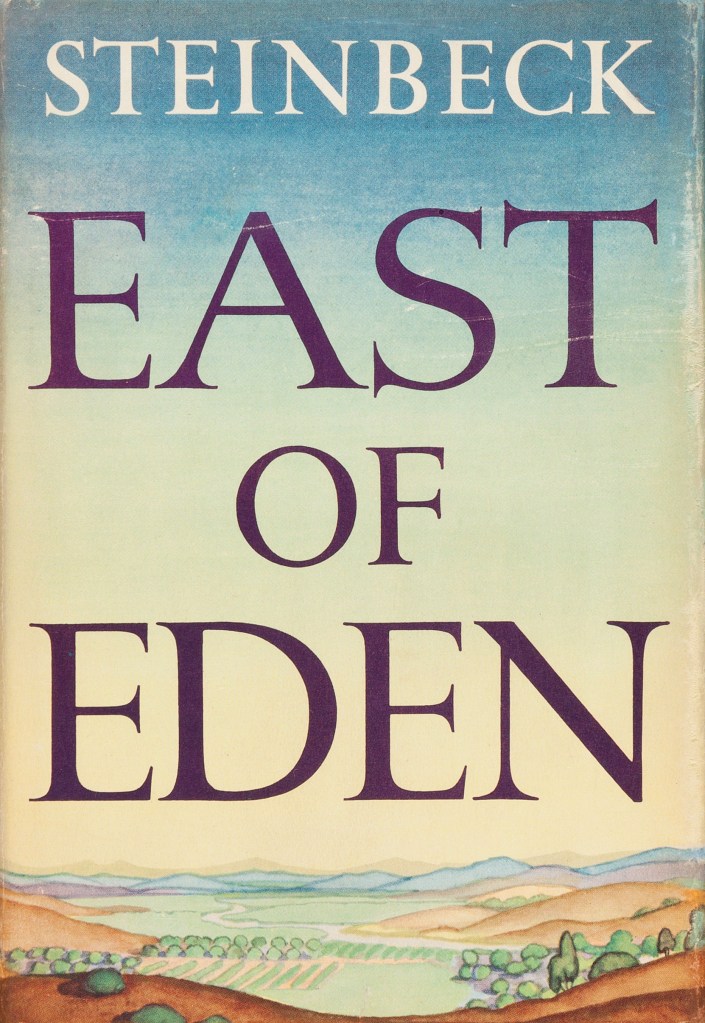
Earlier this year, while Whalers was still in its infancy, I picked up a copy of John Steinbeck’s East of Eden.
Surprisingly, it was one of the few Steinbeck novels I hadn’t read before. Like many, I encountered Of Mice and Men in high school, devoured The Grapes of Wrath and The Pearl during my college years, but East of Eden always seemed to elude me—almost as if I wasn’t ready for it yet.
The novel traces the lives of two families, the Trasks and the Hamiltons, across generations in California’s Salinas Valley. Their stories intertwine, with the sins of parents echoing through the lives of their children.
What struck me immediately was Steinbeck’s meticulous attention to the setting of the Salinas Valley. He devotes the entire first chapter to describing the valley’s landscape, crafting an Eden-like atmosphere filled with vivid details of flowers, animals, land, and soil. Dialogue doesn’t even enter the picture until the fifteenth page, allowing readers to become fully immersed in this world.
I immediately put down the novel and turned my attention back to Whalers. I decided in that moment that my narrative needed a prologue, so that readers could fully comprehend the world in which my characters live. It was in this prologue that I traced the history of New Bedford — from the Wampanoags, through the whaling industry, to the modern day city it stands as today.
As East of Eden unfolds, the two central characters—Aron and Cal Trask—emerge, sons of Adam Trask and the enigmatic Cathy Ames. Adam, a former military man like his father, is a kind-hearted soul whose purchase of land in the Salinas Valley propels the story forward. Cathy, in stark contrast, is depicted as almost purely evil—a “monstrous” figure.
These dual influences shape Aron and Cal’s lives. Adam represents integrity and warmth, while Cathy embodies manipulation and malice. The brothers’ struggle mirrors their parents’ contrasting natures. Aron finds it easy to embrace his father’s virtues, while Cal wrestles with his darker impulses. He wants to be good but often finds himself slipping into manipulation and cruelty. When he finally meets Cathy, he understands the source of his inner conflict.
The novel is, of course, an allegory of the biblical story of Cain and Abel, the sons of Adam and Eve. In the Bible, Cain succumbs to his darker nature, kills Abel, and is cast out to the “east of Eden.” Steinbeck’s novel suggests that we all carry both Cain and Abel within us—two sides constantly battling for control. The story’s most philosophical character, Lee, offers a key insight into this struggle.
While studying the Cain and Abel story, Lee discovers that in the oldest version of the Bible he could find, God tells Cain after the murder, “Thou mayest conquer sin.” This differs greatly from later translations, which changed the phrasing to “You will” or “You must” conquer sin. Lee’s discovery emphasizes that language matters. Where “you will” leaves no room for deviation, and “you must” denies choice, “thou mayest” offers the possibility of both paths. It means we have a choice. We may overcome our inner demons—but it’s up to us.
When writing Whalers, I found myself captivated by this idea: the good and the evil that exist within each of us, and the daily choices that guide us in one direction or the other. I thought of Ethan Callahan and New Bedford in much the same way—torn between two identities, each struggling to find a resolution. Would either of them overcome their inner conflicts? Or would the choices they continue to make make them more like Cathy? Will either of them find the redemption they are looking for?
“Thou mayest.”
Whalers hits bookstores in 2025.

 Kyle Farnworth
Leave a reply to On Influence… – Kyle Farnworth Cancel reply