It’s been quiet around here.
The last time I sat down to type one of these blogs was in May, about three months ago. I’ve been off social media, only coming back to Twitter once to promote A Selection Box, where I read the first chapter of my Work in Progress.
There’s a lot of reasons why I took a step back from social media and this website, most of which I’ll get into in this blog. The most important of those reasons was to dedicate myself to writing my third novel, Is This It?, and the first draft is officially complete.
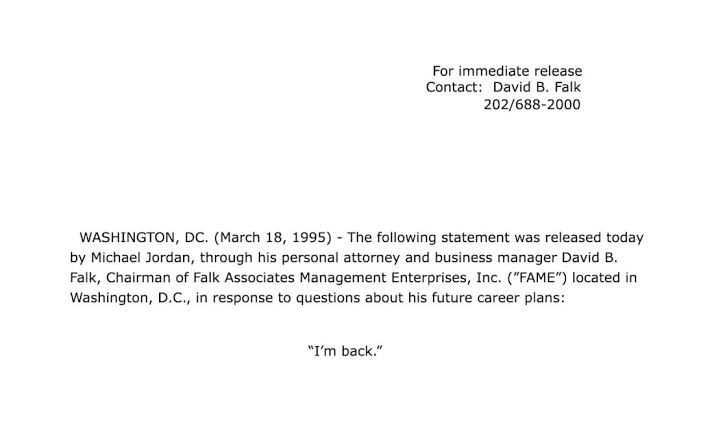
So, like Michael Jordan in 1995, I’m back.
Is This It?
Is This It? is a work of speculative fiction. It’s follows the Duvall family, Ansel, Estelle, Gus, and William, as they grapple with the death of their youngest brother, Francis, in a world recently changed by the surfacing of documents that seem to disprove the existence of an after-life.
In the world of Is This It?, churches have closed, hospitals have been renamed, and human beings are wrestling with the idea that, according to fragments of history they haven’t read but have been told about, there’s nothing waiting for them on the other side. Francis, whose family affectionately remembers as Franny, is gone, and the hope of reuniting some day has been taken away from them.
Ansel, a former deacon, now works a job as a shuttle driver at the local hospital. He picks up nurses and patients from the parking lot and drives them where they need to go. Gus, an adjunct literature professor at UMass Dartmouth, views the papers as a win. They’ve finally proved him right in the ongoing battle of faith vs. intellect against his father. William, the middle brother who is now the youngest, is the only one who seems to hold onto hope that Franny is out there, somewhere, somehow.
Their mother, Estelle, wrecked by grief, begins pushing against the boundaries of morality itself. If nobody is watching, and she is the only person who knows when she does something wrong, then does it really matter?
The Duvall’s private battles are thrown into the public light when the man accused of killing Franny, named Enoch Black, claims that he hears the voice of God, and it was God who told him to do it.
Around this time yesterday, I officially typed the ending of Is This It?, and my first draft is complete. There’s still a long way to go, but if you’re curious about what’s left to do, what first drafts entail, and what they mean to me, you can check out this blog I wrote in May of last year.
But for now, it’s done.
I made something.
And that matters more to me than I realized.
The Price of Popularity
Focusing on Is This It? was the main reason I disappeared from social media. But it wasn’t the only one.
In any field — art, music, literature, sports, etc, — people need a spark to get going. I needed a spark badly. I was too comfortable promoting Medusa and not working on anything new.
I found my spark on Twitter.
My second novel, Medusa; Or, Men Entombed in Winter, was doing pretty well. It was selling copies quickly and getting a lot of praise from readers and other writers.
Saffron Asteria called it “one of the best books [she’s] read in [her] adult life.”
Andres da Silveira Stein called it “the finest literary fiction I’ve read in at least a decade.”
Josh from Already Overbooked rated it #1 in his list of the top books of the year.
But there’s no doubt that Medusa is a polarizing book. Medusa, the character, is a polarizing figure. Some readers loved her, others hated her, some loved how she was written, others did not. I knew that when I wrote it.
I also knew this when I wrote a blog on what was coined as “The Toxic Positivity Movement”, in which I argued that indie novels should be read and reviewed with the same level of scrutiny as traditionally published books.
Eventually, I posted a two-star review of a popular indie novel.
Then two authors posted negative reviews of mine.
I could explain why I thought it happened. I could explain why I thought it was unfair. I could tell you what I thought of the review, the people who wrote them, or the larger conversation around indie books and criticism.
A few months ago, I probably would have.
But that’s kind of the point.
Because somewhere along the way, after Medusa, I stopped creating.
Instead, I started paying attention to who liked me, who didn’t, what people were reviewing, what people were saying, what arguments were happening, who deserved criticism, who didn’t.
I started reading books not only because I loved books or because I wanted to learn something about writing, but because I was thinking about what I could say about them afterward.
I was talking about art more than I was making it.
And I didn’t really understand that until Oliver Tree died.
Oliver Tree
When musical artist Oliver Tree passed away on June 14th, a day before my birthday, I found myself diving deep into his music, interviews, and persona. I came across an interview he did on a popular podcast, in which he critiqued the host by telling him:
“You used to make stuff. Now you just critique stuff. And that’s the difference between people like me and people like you… You were contributing and now you’re just coming after people… I want you to tell me why you stopped making things.”
That got me.
Because there was a period after Medusa where I had done exactly that.
I stopped making things.
Not completely, obviously. I still thought about stories. I still considered myself a writer. I still talked about writing constantly.
But I wasn’t doing the thing.
I wasn’t sitting down every day and making something that hadn’t existed before.
Instead, I was participating in this strange ecosystem around art where everybody is watching everybody else, reacting to everybody else, reviewing everybody else, subtweeting everybody else, ranking everybody else.
As if the criticism is the art.
It isn’t.
It’s this place where Is This It? comes from.
This place of “why did you stop making stuff?”
This place of “all you do is critique stuff.”
I have entered a new era and, most importantly, in this new era I am done worrying about what everyone else is doing, thinking, writing, and saying.
X
In the next few months, I’m going to come back to Twitter (X, whatever), but I want to come back differently.
Just this week, I’ve watched writers and editors spend days arguing with one another publicly about criticism, reviews, intentions, tone, motives, and everything else people argue about on that website.
I’m sure I’ll still have opinions. I’m sure I’ll still occasionally write about books I love or books I don’t. I’m sure somebody will annoy me and I’ll have to stop myself from typing something stupid.
But I don’t want any of that to become the work.
Because Oliver Tree was right.
“You used to make stuff.”
I made Whalers.
I made Medusa.
And now?
I made Is This It?
Time to make it perfect.
Love you guys.
-KF


Leave a Reply